

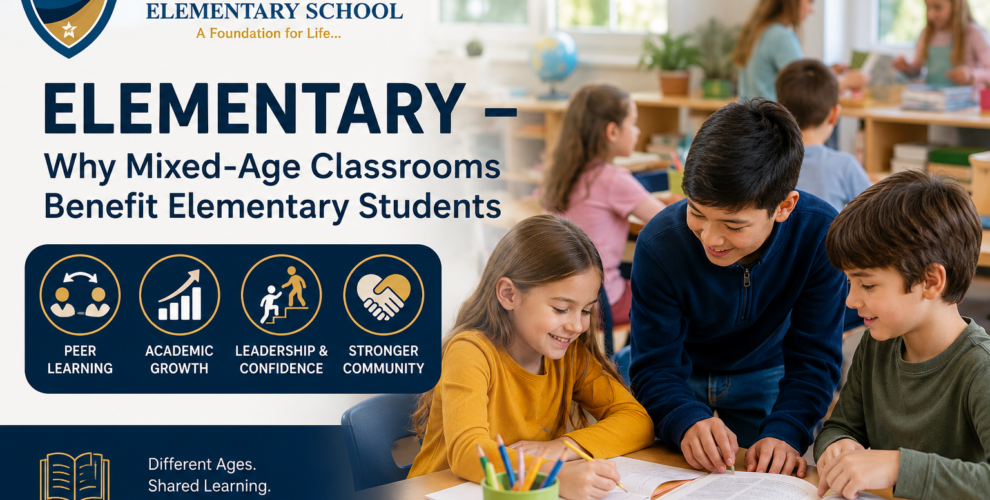
Choosing the right elementary education is one of the most important decisions parents make. While traditional schools typically group children by a single grade level, a Montessori school program follows a different approach—bringing children of different ages together in one classroom. This mixed-age environment is one of the defining features of Montessori education and is designed to support academic, social, and emotional growth.
At Hillcrest Montessori Elementary School (HMES) in Fort McMurray, mixed-age classrooms help children become independent learners, compassionate classmates, and confident leaders. The school’s Montessori Elementary Program (Grades 1–6) focuses on building strong academic foundations while nurturing creativity, responsibility, and global awareness.
Whether your child is transitioning from preschool Fort McMurray programs or you’re exploring elementary education options, understanding the benefits of mixed-age classrooms can help you make an informed choice.
What Is a Mixed-Age Classroom?
A mixed-age classroom brings together children within a multi-year age range rather than separating them into single-grade classrooms. In Montessori education, this intentional structure allows students to learn, collaborate, and grow alongside peers at different developmental stages.
Instead of competing with classmates of the exact same age, children experience a learning community where everyone has opportunities to both receive guidance and provide support.
Why Montessori Uses Mixed-Age Classrooms
Mrs. Maria Montessori believed that children naturally learn through observation, collaboration, and meaningful experiences. Mixed-age classrooms mirror real-life communities, where people of different ages work and learn together. This environment encourages children to:
- Learn at their own pace
- Develop leadership skills
- Build empathy and cooperation
- Gain confidence through mentoring others
These principles remain central to authentic Montessori education today.
Younger Students Learn by Observing Older Peers
Children are naturally curious and often learn best through observation.
In a mixed-age classroom, younger students see older classmates:
- Reading independently
- Solving mathematical problems
- Completing science activities
- Practicing responsibility
- Demonstrating respectful classroom behavior
Seeing these skills in action motivates younger children while making learning feel achievable.
Instead of relying only on teacher instruction, children benefit from daily peer modeling that builds confidence and curiosity.
Older Students Become Confident Leaders
Leadership develops naturally in Montessori classrooms.
Older elementary students often:
- Help explain classroom routines
- Support younger classmates
- Demonstrate learning materials
- Encourage teamwork
- Model positive behavior
Teaching others reinforces their own understanding while developing communication, patience, and responsibility.
Leadership isn’t assigned—it grows through everyday interactions.
Children Learn at Their Own Pace
Every child learns differently.
Some students excel in mathematics while others develop stronger language or creative abilities first.
A mixed-age Montessori classroom allows each child to:
- Progress when ready
- Spend additional time mastering concepts
- Explore advanced lessons without unnecessary waiting
- Receive individualized guidance
Rather than comparing children against a single classroom average, Montessori respects each learner’s unique developmental journey.
Collaboration Replaces Competition
Traditional classrooms often emphasize comparison between students.
Mixed-age learning encourages:
- Cooperation
- Peer support
- Shared problem-solving
- Respect for individual strengths
Students celebrate each other’s achievements while learning that everyone contributes differently to the classroom community.
This creates a positive learning environment where children feel safe asking questions and trying new challenges.
Social Skills Grow Naturally
Elementary education extends far beyond academics.
Children also develop:
- Communication skills
- Emotional intelligence
- Conflict resolution
- Empathy
- Respect
Because students regularly interact with children of different ages, they learn to adapt their communication style and understand different perspectives.
These interpersonal skills prepare students for future success in school, work, and everyday life.
Stronger Relationships with Teachers
One of the greatest advantages of Montessori education is continuity.
Children often remain with the same teacher during a multi-year learning cycle.
This allows teachers to:
- Understand each child’s strengths
- Identify learning opportunities
- Build meaningful relationships
- Provide personalized guidance
- Support long-term academic growth
Parents also benefit from stronger communication with teachers who know their child’s learning journey well.
Independence Becomes a Daily Habit
Montessori classrooms are designed to help children become independent thinkers.
Students learn to:
- Manage their work schedule
- Choose meaningful learning activities
- Solve problems independently
- Take responsibility for classroom materials
- Organize their learning
These habits prepare children for higher education and lifelong success.
A Sense of Belonging Builds Confidence
Every child experiences different roles over time.
When they are younger, they learn from older classmates.
As they grow, they become mentors for newer students.
This cycle creates:
- Confidence
- Responsibility
- Community
- Belonging
- Pride in helping others
Children understand they are valuable members of their classroom community.
Why Parents in Fort McMurray Appreciate Mixed-Age Learning
Families looking for a quality Montessori school program often appreciate the balanced approach that mixed-age classrooms provide.
Parents notice children becoming:
- More confident
- Better communicators
- Independent learners
- Responsible leaders
- Curious problem-solvers
For families searching beyond a traditional daycare Fort McMurray setting or planning the transition from preschool Fort McMurray, Montessori elementary education offers continuity that supports long-term growth and development. HMES provides programs beginning with the Early Years cycle and continuing through Elementary Grades 1–6.
Why Choose Hillcrest Montessori Elementary School?
Hillcrest Montessori Elementary School offers an Alberta-accredited Montessori Elementary Program that combines academic excellence with character development.
Students benefit from:
- Authentic Montessori learning
- Mixed-age elementary classrooms
- Individualized instruction
- Experienced educators
- Outdoor learning opportunities
- Small, supportive learning community
- Focus on leadership and global citizenship
Located in Fort McMurray, HMES helps students become lifelong learners who are prepared academically, socially, and emotionally for future success.
Final Thoughts
Mixed-age classrooms are more than a unique classroom arrangement—they are an intentional part of the Montessori philosophy that helps children develop academically, socially, and emotionally.
By learning alongside peers of different ages, elementary students gain confidence, leadership skills, independence, and a genuine love of learning. They experience a collaborative environment where every child has opportunities to both learn and lead.
If you’re exploring elementary education options in Fort McMurray, a Montessori environment with mixed-age classrooms can provide the strong foundation your child needs for lifelong success.
Frequently Asked Questions (FAQs)
A mixed-age classroom includes children from different age groups learning together. In Montessori education, this encourages peer learning, collaboration, leadership, and individualized academic growth.
Yes. Mixed-age classrooms support independent learning, strengthen social skills, build confidence, and allow students to progress at their own pace while learning from peers.
A Montessori school program emphasizes self-directed learning, hands-on activities, mixed-age classrooms, individualized instruction, and the development of independence and responsibility.
Absolutely. Many children move smoothly from preschool Fort McMurray programs into Montessori elementary education because both emphasize curiosity, independence, and age-appropriate learning experiences.
While a daycare Fort McMurray program primarily focuses on childcare and early development, a Montessori elementary program provides a structured academic environment that develops critical thinking, leadership, independence, and lifelong learning skills.